The Strip Light

It was spring when I pushed that door open.
Img 20240226 142500

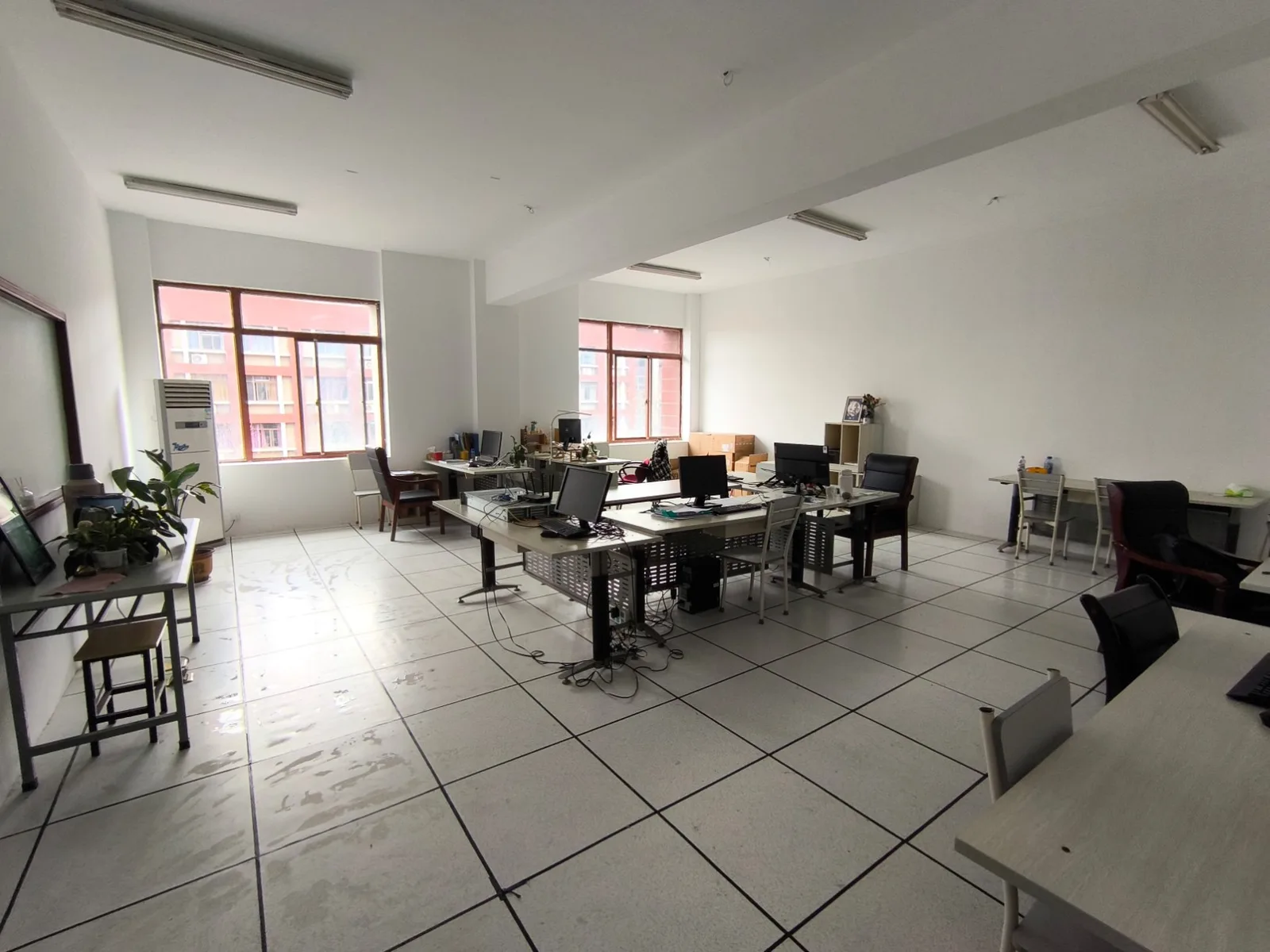
The studio lighting was nothing special — the long fluorescent tubes, cold white, not artistic at all. The two teachers leading us were both women, Ms. Zhou and Ms. Shi. They understood a great deal, and however thorny the problem, they never lost their temper.

I suppose that is what a good teacher looks like. Not volume, not authority, but really understanding what you are doing.

The days in the studio were simple. One desk, one computer, one glass of water, from morning until the dormitory doors closed at ten. There we learned Spring Boot autowiring, Vue reactivity, MySQL index tuning. Looking back, much of it is out of date; stacks turn over faster than pages. I am glad, though, that I learned it before the AI era arrived.

It was also there that I met her.

She had arrived before me. The first time we dealt with each other she was not especially polite, and I took her for a senior; only days later did I learn she was in class 2, same year and same major as me. She talked fast and walked fast.

After we had worked on the project for a while, we would go up to the roof to talk in the wind. The time up there had clear edges.

57f810da 3b38 49ee A66b 7dfab3efd064

Later we got together.

And later, we separated.

I do not want to say much about why. Student relationships rarely lose to some dramatic conflict; they lose because both people are too young to know how to fold a relationship into lives that have not taken shape yet.

Code can be debugged; feelings sometimes cannot. Some bugs are the kind where you know exactly where the problem is and still do not know how to fix it — you fix one place and something else breaks, and in the end you can only roll back.

But I have never regretted it.

Because what I met in that studio was not only her, but the people who made me into who I am now.

Image 1783970808979 602

Seasons came and went and the time went quickly. We simply got used to pushing that door open every day, pulling out a chair, sitting down and quietly finishing what was in front of us.

Even if fluorescent tubes are not artistic, even if some of that code will eventually be obsolete, that desk and that roof and the company held us, solidly, when we needed holding.

Later, staring at a screen late at night, I still think of that door.

Those memories have stayed lit in my head, like the strip light.
 

Related posts

The Island on Bird Street

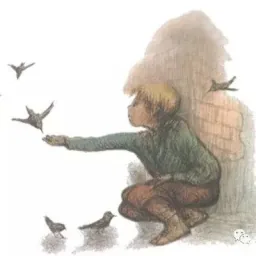
That afternoon, for no reason I could name, I suddenly remembered a novel I read as a child: The Island on Bird Street. When I read that book I was not reading someone else's story. I climbed the rope ladder into that ruin and hid in the cupboard on the third floor; I went down the secret passage, back and forth between the Jewish quarter and the Polish one; I held my breath to avoid German soldiers and searched empty rooms for food. The whole adventure was mine, from beginning to end. All these years later I can still remember that heartbeat — frightened, excited, and certain I could do anything. Everything a child could want from an adventure, that book gave me. And what I miss more than the adventure is the way love and friendship were written in it. Almost nothing happened in that love story, and precisely because nothing happened, everything was settled. It made me decide, very young, that real feeling is clean and restrained and unchanged even in a broken world; that it is sharing a piece of bread in the ruins, that it is thinking of someone else while your own life hangs by a thread. Friendship was defined just as clearly — a guinea pig named Snow, a few people you can count on. My whole standard for love and friendship was probably set back then, from that book's mould, and I have never replaced it. Later I grew up. I read a lot of news and a lot of history, and gradually formed some rather unflattering views about the Jewish people. It is not a pleasant thing to say, but I have to be honest. At a certain age the heart ends up holding many things that contradict each other. The strange part is that it never made me dislike the book. The adventure, the love, the friendship — they are still there in my memory, still bright. The truth and goodness in those pages, courage and kindness and love and hope, are still the foundation at the very bottom of how I see things. I even think sometimes: the person who wrote it was herself a Jewish survivor; the people I met in those pages were Jewish children too. That makes me a little uncomfortable, but a fact is a fact. Perhaps a person's heart is meant to hold that discomfort. Sometimes I think the books we read in childhood are seeds. What grows out of them is not governed by the messy feelings that come later. Number 78 Bird Street, that ruin, still stands somewhere in my inner world, and the wind cannot knock it down.

Aug 20, 2026·Everyday musings
The Island on Bird Street

The Deer's Dream

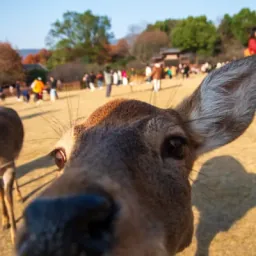
She pushed her glasses up the bridge of her nose and looked up at me. That was the year Nanjing first turned cold. Not the cold of deep winter — the kind that slips a little chill into the autumn wind. The stone-elephant road at Ming Xiaoling is at its best around then. The maples on either side seemed to be finishing everything before the first frost: one tree holding layer upon layer of colour, and with the sun coming through it, the whole road was warm. She walked ahead of me, stepping through fallen leaves. The deer park was small; at the gate each visitor was handed a little bundle of hay. The deer are used to people. They came over without hurry, nose first, damp and cool; she pulled her hand back by instinct, then slowly reached out again. In the end she simply crouched down and a deer stood right in front of her, quietly eating from her palm. She freed her other hand and stroked its forehead. The deer did not move. Its eyelids sank slowly, as if it had fallen asleep. The deer was calm and understood nothing. Nothing about seasons, nothing about partings — it only knew that a palm was warm and the hay was sweet. Neither did she, really. And not only about the deer; there was a great deal she did not understand. She did not know I was about to graduate, did not know that some things come with a deadline, did not know that no autumn lasts longer than a frost. She knew very little. The deer was lovely. And Nanjing's autumn is too short. That day she crouched on the grass feeding the deer in small pieces, and I stood one step away watching her back. She was so light — light as a leaf in autumn. I was afraid I wouldn't catch it, and afraid that if I did, the wind would carry it off. That year the maple leaves fell fast. Before anyone had looked their fill, the branches were bare. Later I lived through another autumn. The maples turned red just the same; people still queued for tickets at the deer park. I have never been back to Ming Xiaoling. The wind came in the end. I never did hold off that frost; I could only stand where I was and watch autumn come loose from the branches entirely. Perhaps some people are like seasons — meant to walk only one short stretch of the stone-elephant road beside you. When the wind carried the leaves away it took that early autumn with it, the one I never had time to button my coat against, and set it down quietly inside a deer's dream.

May 20, 2026·Everyday musings
The Deer's Dream

Remembering the Pentax K-1

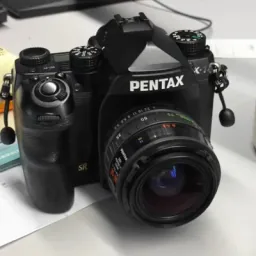
I once owned a Pentax K-1. Back then my pockets were emptier than my face — rent, food, the commute, each one reminding you that some things cannot be kept. When I sold it I did not dare look at it for long, like sending away a horse I could no longer afford to feed. What I have now is a Nikon Z fc: light, quick, easy to carry on a strap all day. It is a competent tool and a reliable companion. But a Pentax wants to be handled. It is heavy enough that every shutter press feels like a decision, the body thick and solid, and even when you are not shooting you cannot help taking it out to wipe it down and turn the aperture ring. What I miss most is the colour. Pentax colour has a temper: warm, thick, like dusk steeped in amber. That green looks like steam rising off a mountain after rain. Straight-out-of-camera files carry the body heat of the film era; they need no editing, and editing them feels like an intrusion. The Z fc gives freedom; the K-1 gave ceremony. One takes you further, the other slows you down. Some cameras are enough simply to have owned. It goes on living in your stubbornness about light and colour: the body is gone, the way of seeing remains.

Apr 27, 2026·Everyday musings
Remembering the Pentax K-1
Music